Invasive Species Removal Statement
Why We’re Removing Invasive Plants at Buckley Wildlife Sanctuary
Buckley Wildlife Sanctuary is home to native trees, wildflowers, and wildlife that have adapted to this land over thousands of years. Invasive plants like asian bush honeysuckle threaten that balance. They grow fast, block sunlight from native seedlings, and crowd out the native plants that birds, pollinators, and other wildlife depend on for food and shelter. Left unchecked, they can quickly create a dense thicket that will overrun the native forest and destroy plant and wildlife diversity.
That’s why we’re recruiting volunteers to help us remove honeysuckle and other invasive plants from the sanctuary.
Our approach combines two methods. Much of the work is mechanical: volunteers cut invasive shrubs and vines by hand using loppers and saws. To prevent cut plants from resprouting we use a small amount of the herbicide glyphosate applied directly to the freshly cut stem with a dauber. This targeted method means the herbicide touches only the plant we’re treating, not the surrounding soil or nearby native plants, and there is little overspraying or drift involved.
In the fall, we will also spray the herbicide to the foliage of smaller shrubs. These applications will be targeted and occur after frost when native plants have died back but honeysuckle is still green. Applying the herbicide at this time, will maximize the herbicide’s effectiveness and root uptake, while minimizing the impact on native plants. Glyphosphate will not affect plants that have died back.
All herbicide application is done by staff or volunteers who hold a state herbicide applicator license, following label instructions and safety guidelines. This dual approach lets us clear invasive growth efficiently while keeping chemical use minimal, targeted, and safe for people, pets, and the land.
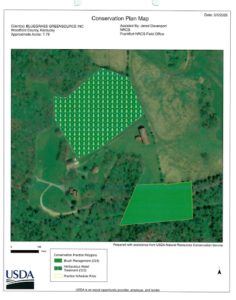
Our focus for 2026 and 2027 is 2.6 acres along the entry drive and along the Blue Trail. Bluegrass Greensource is the recipient of an EQIP grant that helps fund this invasive species removal project. The project also includes herbicide treatment that will be done after a prescribed burn on a 5 acre native grass/forbs field in the fall of 2026.